
LED lighting for machine vision - Lighting type (+info)
 Radial Lighting
Light comes from camera axis perimeter, so that reduces shadows, softens textures and minimizes the influence of scratches, dust and imperfections that the object may have during the image capture. (+info)


 Darkfield Lighting
High intensity light that comes into contact with the object with a small angle regarding the support surface. What is being obtained in this way is that on surfaces with fissures or raised parts, these ones interfere with the light trajectory producing bright areas. (+info)


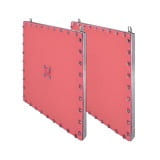
 Backlight Lighting
The camera is directly addressed to the lighting source, showing an uniform white surface. Any object interposed between the camera and the light source produces a shadow detected by the camera as a black shape on the white background, obtaining maximum contrast. (+info)



 Cloudy day Lighting
Effect produced when the object is illuminated with diffuse light from all directions,eliminating shades and reflections, making textures soft and diminishing the rays influence, dust, relieves and curvatures that the object under inspection could have. (+info)


 Bright field Lighting
Produced when the lighting source comes into contact with a small angle with the bright surface of the object to be inspected.
The camera is also placed at the same angle of light source in order to capture the reflected image on the inspected object. If there is any imperfection on the object, a dark spot appears in the image taken by the camera, due to the fact that this imperfection produces a variation in the angle formed by the incident light regarding the reflected light, losing the reflection of the illumination source (+info)
 Light projector lighting
Designed to be collocated in any position except on camera axis, so that the projected shade could be changed depending on the inspected piece needs.
The incidence light angle regarding the lighting surface will determine the degree of relieves prominence. In case of a small angle regarding the horizontal, the light will produce shadows in all relieves of the piece. In case of angles close to 90° regarding the horizontal, the shadow will be visible just in very defined relieves. (+info)


 Coxial Lighting
Light comes from the same light axis of the camera, so that shadow is projected vertically and therefore is not perceptible by the lens. On flat bright surfaces, the camera would capture its own lens if this lighting mode were not used. (+info)


